Okay, so you’re diving into Bitcoin – awesome! But then you hear about “wallets,” and suddenly it feels a lot less simple. It’s not like your leather one for cash, that’s for sure. Choosing the right wallet is
-crucial* for keeping your Bitcoin safe, and the biggest decision is usually between a hot wallet and a cold wallet. It can feel overwhelming, but trust me, understanding the difference is totally worth it.
Think of it this way: Bitcoin wallets are how you interact with the blockchain, proving you own your coins and allowing you to send and receive them. They aren’t actually
-holding* the Bitcoin itself, but they hold the ‘keys’ that let you control it. Early wallets were often just files on your computer, but now we have a ton of options, from apps on your phone to dedicated hardware devices.
Imagine you just received your first Bitcoin – now what? That’s where understanding these wallet types comes in.
Understanding Bitcoin Wallets: A Guide to Security
Bitcoin, the pioneering cryptocurrency, has revolutionized the way we think about money. But owning Bitcoin isn’t like keeping cash in your wallet. It requires a digital wallet – a software program or hardware device that allows you to interact with the Bitcoin network. This guide will break down the different types of Bitcoin wallets, their security features, and help you choose the best option for your needs.
It’s a crucial step for anyone venturing into the world of cryptocurrency.
A Bitcoin wallet doesn’t actually
-store* your Bitcoin. Instead, it securely holds the cryptographic keys that allow you to access and spend your Bitcoin, which are recorded on the blockchain. Think of it like the key to a safety deposit box – the box itself (your Bitcoin) is elsewhere, but you need the key (your wallet) to access it.
Introduction to Bitcoin Wallets
The fundamental purpose of a Bitcoin wallet is to manage your private keys, enabling you to send, receive, and store Bitcoin. These keys are essential for authorizing transactions on the Bitcoin network. Without them, you can’t access your funds. A wallet provides an interface to interact with the blockchain, creating and signing transactions.
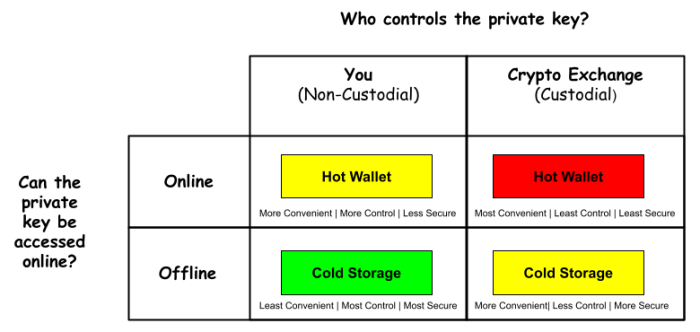
It’s important to distinguish between a Bitcoin wallet and a Bitcoin exchange account. An exchange account is essentially a custodial service – the exchange holds your private keys for you. While convenient for trading, it means you don’t have full control over your Bitcoin. A true Bitcoin wallet gives
-you* control of your keys, and therefore, your Bitcoin.
Early Bitcoin wallets were often simple software programs that stored the wallet file on your computer. These were vulnerable to malware and hacking. Over time, wallets have evolved to include more sophisticated security features, like encryption, two-factor authentication, and hardware-based key storage. Today, we have a wide range of options, from mobile apps to dedicated hardware devices.
Imagine Sarah receives 1 Bitcoin as a gift. She’s new to cryptocurrency and needs a way to store it securely. She has several options: a mobile app on her phone, a desktop program on her computer, or a dedicated hardware device. Each option has different security implications and levels of convenience, which she needs to consider before making a choice.
Hot Wallets: Convenience and Accessibility
A ‘hot wallet’ is any Bitcoin wallet that is connected to the internet. This constant connection makes them convenient for frequent transactions, but also introduces a higher level of security risk. Because the private keys are accessible online, they are potentially vulnerable to hacking attempts.
There are several types of hot wallets, each with its own strengths and weaknesses:
- Desktop Wallets: Software installed directly on your computer. Offer a good balance of security and convenience.
- Mobile Wallets: Apps for your smartphone. Extremely convenient for everyday spending, but security relies on the security of your phone.
- Web Wallets: Accessed through a web browser. The most convenient option, but also the least secure, as you’re trusting a third party to hold your keys.
- Browser Extension Wallets: Add-ons for your web browser. Useful for interacting with decentralized applications (dApps), but security depends on the extension’s code and your browser’s security.
Security features vary significantly. Desktop wallets often offer encryption and backups. Mobile wallets may include biometric authentication. Web wallets rely heavily on the security of the provider. Browser extension wallets often integrate with hardware wallets for added security.
| Wallet Type | Platform | Security Features | Ease of Use |
|---|---|---|---|
| Electrum | Desktop (Windows, macOS, Linux) | Encryption, Multi-signature support, Seed phrase backup | Moderate |
| Trust Wallet | Mobile (iOS, Android) | Biometric authentication, Secure Enclave integration | Easy |
| Blockchain.com | Web, Mobile | Two-factor authentication, Cold storage options (separate service) | Easy |
| MetaMask | Browser Extension (Chrome, Firefox, Brave) | Integration with hardware wallets, Seed phrase backup | Moderate |
Cold Wallets: Enhanced Security Measures
A ‘cold wallet’ is a Bitcoin wallet that is not connected to the internet. This offline storage significantly reduces the risk of hacking and theft. The core principle is to keep your private keys completely isolated from online threats.
The two main forms of cold wallets are:
- Hardware Wallets: Physical devices that store your private keys securely. They resemble USB drives and require physical confirmation for transactions.
- Paper Wallets: A printed piece of paper containing your public and private keys. Simple and secure, but requires careful handling and storage.
Generating and securely storing a seed phrase is crucial for hardware wallets. This 12-24 word phrase is a backup of your private keys. If your hardware wallet is lost or damaged, you can use the seed phrase to recover your Bitcoin. It’s vital to write it down on paper and store it in a safe, secure location, separate from the hardware wallet itself.
Creating a paper wallet involves generating a key pair offline, using a dedicated software program. The process must be done on a computer that is not connected to the internet to prevent keylogging or malware from compromising your keys. The resulting public and private keys are then printed on paper. The paper must be stored securely, protected from damage and unauthorized access.
Security Risks Associated with Hot Wallets
Hot wallets are vulnerable to a range of online threats. Common vulnerabilities include malware that can steal your private keys, phishing attacks that trick you into revealing your credentials, and keyloggers that record your keystrokes. The very nature of being connected to the internet exposes them to these risks.
Storing private keys online means they are potentially accessible to hackers. A successful hack can result in the complete loss of your Bitcoin. The more valuable your Bitcoin holdings, the greater the incentive for hackers to target your wallet.
To mitigate these risks, it’s essential to use strong, unique passwords for your hot wallets. Enable two-factor authentication (2FA) whenever possible, adding an extra layer of security. Keep your software up to date to patch security vulnerabilities. Be cautious of suspicious emails or links.
In 2016, Bitfinex, one of the largest Bitcoin exchanges, was hacked, resulting in the theft of approximately 119,756 Bitcoin (worth over $70 million at the time). The hackers gained access to private keys stored on the exchange’s servers, highlighting the risks of custodial wallets and online storage.
Security Advantages of Cold Wallets
Source: bpcdn.co
Cold wallets minimize exposure to online threats by keeping your private keys offline. This makes them significantly more secure than hot wallets. Hackers cannot access keys that are not connected to the internet.
Hardware wallets employ several security mechanisms. Secure elements are specialized chips designed to protect sensitive data, like private keys. PIN protection prevents unauthorized access to the device. Many hardware wallets also require physical confirmation of transactions, preventing remote execution of unauthorized transfers.
Using a passphrase in addition to a seed phrase provides an extra layer of security. A passphrase is a randomly chosen word or phrase that is combined with your seed phrase to create a more complex key. Even if your seed phrase is compromised, the passphrase adds an additional hurdle for attackers.
A secure setup for a hardware wallet involves keeping the device physically secure, regularly updating the firmware to patch security vulnerabilities, and storing the seed phrase in a safe, offline location. Consider using a fireproof and waterproof safe for both the device and the seed phrase.
Comparing Transaction Signing Processes
In hot wallets, transactions are typically signed directly on the device connected to the internet. This means your private keys are briefly exposed to the online environment during the signing process. In contrast, cold wallets sign transactions offline, minimizing this exposure.
The concept of ‘air-gapped’ transactions is central to cold wallet security. An air-gapped transaction is signed on a device that has never been connected to the internet. The signed transaction is then transferred to an online computer for broadcasting to the Bitcoin network, typically via a QR code or USB drive.
Signing a transaction with a hardware wallet typically involves connecting the device to your computer, navigating to the transaction details on your computer, and then physically confirming the transaction on the hardware wallet using its buttons. The hardware wallet signs the transaction offline and sends the signed transaction back to your computer for broadcasting.
- Verify the recipient address: Double-check that the address is correct before signing.
- Confirm the amount: Ensure the amount you are sending is accurate.
- Check the transaction fee: Understand the fee being charged and its impact on confirmation time.
- Review the transaction details: Carefully examine all transaction details before confirming.
- Use a reputable wallet: Choose a well-known and trusted wallet provider.
Use Cases: When to Choose a Hot Wallet

Source: watcher.guru
A hot wallet is a suitable choice for scenarios where convenience and accessibility are paramount, such as frequent small transactions. If you’re regularly buying coffee or making small online purchases with Bitcoin, a hot wallet is the most practical option.
The convenience of hot wallets makes them ideal for everyday Bitcoin spending. They allow you to quickly and easily send and receive Bitcoin without the need for complex security procedures.
Hot wallets are also essential for interacting with decentralized applications (dApps). Many dApps require a wallet to connect and authorize transactions. Browser extension wallets like MetaMask are commonly used for this purpose.
Imagine David uses a mobile wallet to buy his morning coffee with Bitcoin every day. The convenience of paying with his phone makes it a seamless experience. He keeps a small amount of Bitcoin in his mobile wallet for these daily expenses, knowing that the risk is relatively low due to the small amounts involved.
Use Cases: When to Choose a Cold Wallet
A cold wallet is the preferred option for long-term storage of significant Bitcoin holdings. If you plan to hold Bitcoin for an extended period, a cold wallet provides the highest level of security against theft or loss.
Securing large amounts of Bitcoin against theft or loss is paramount. Cold wallets minimize the risk of hacking and provide peace of mind. The cost of a hardware wallet is a small price to pay compared to the potential loss of a substantial Bitcoin investment.
Cold wallets can also be used for estate planning and inheritance. By securely storing your seed phrase and providing instructions to your heirs, you can ensure that your Bitcoin is passed on according to your wishes.
| Scenario | Recommended Wallet Type | Security Level | Convenience |
|---|---|---|---|
| Daily spending | Hot Wallet (Mobile) | Low | High |
| Long-term storage of large holdings | Cold Wallet (Hardware) | High | Low |
| Interacting with dApps | Hot Wallet (Browser Extension) | Moderate | Moderate |
| Inheritance planning | Cold Wallet (Hardware) | High | Low |
Multi-Signature Wallets: An Added Layer of Security
A multi-signature wallet requires multiple approvals to authorize a transaction. Instead of a single private key controlling the funds, multiple keys are required. For example, a 2-of-3 multi-signature wallet requires two out of three keys to sign a transaction.
The benefits of requiring multiple approvals include increased security and reduced risk of single-point failure. If one key is compromised, the funds remain secure as long as the other keys are not compromised.
Multi-signature wallets are useful for shared accounts, corporate treasuries, and any situation where multiple parties need to control funds. They provide a robust security solution for managing large amounts of Bitcoin.
Setting up a 2-of-3 multi-signature wallet involves generating three key pairs and configuring the wallet to require two signatures for each transaction. Each key can be held by a different individual or stored in a separate secure location. This ensures that no single person can unilaterally control the funds.
Best Practices for Wallet Security – General
Securing any Bitcoin wallet, regardless of type, requires a comprehensive approach. Here’s a list of best practices:
- Use strong, unique passwords: Avoid easily guessable passwords and use a password manager.
- Enable two-factor authentication (2FA): Add an extra layer of security to your wallet.
- Regularly back up your wallet: Create backups of your seed phrase and store them securely.
- Store seed phrases offline: Never store your seed phrase on a computer or phone.
- Keep your software up to date: Patch security vulnerabilities by updating your wallet software.
- Be cautious of phishing attacks: Verify the authenticity of emails and websites before entering your credentials.
- Avoid reusing Bitcoin addresses: Use a new address for each transaction to protect your privacy.
- Verify the integrity of downloaded wallet applications: Check the digital signature of the application to ensure it hasn’t been tampered with.
Regular backups are essential. If your wallet is lost or damaged, you can use your seed phrase to recover your Bitcoin. Secure storage of seed phrases is equally important. Consider using a fireproof and waterproof safe.
Reusing Bitcoin addresses can compromise your privacy. Each time you reuse an address, it becomes easier to link your transactions together. Using a new address for each transaction helps to maintain your anonymity.
Before downloading a wallet application, verify its integrity. Check the digital signature of the application against the developer’s website to ensure it hasn’t been tampered with by malicious actors.
Concluding Remarks
Source: coingape.com
So, hot wallets offer convenience, perfect for everyday use and smaller amounts, but come with inherent risks. Cold wallets, while less convenient, provide a significantly higher level of security, making them ideal for long-term storage and larger holdings. There’s no single “best” option; it really depends on
-how* you plan to use your Bitcoin.
Ultimately, a layered approach to security is smart. Consider using a hot wallet for daily spending and a cold wallet for the bulk of your investment. And remember, no matter which wallet you choose, always practice good security habits – strong passwords, two-factor authentication, and keeping your seed phrase safe are non-negotiable. Protecting your Bitcoin is protecting your financial future!
Answers to Common Questions
What happens if I lose my seed phrase?
Losing your seed phrase means losing access to your Bitcoin. It’s the master key to your wallet, and there’s no way to recover it without it. Treat it like the most important password you’ll ever have!
Can I use multiple wallets?
Absolutely! Many people use a combination of hot and cold wallets. A hot wallet for everyday transactions and a cold wallet for long-term storage is a common and recommended strategy.
Are paper wallets still secure?
Paper wallets
-can* be secure if generated and stored correctly – completely offline. However, they’re prone to physical damage or loss, and require careful handling to avoid compromising your private keys.
What is a hardware wallet’s ‘secure element’?
A secure element is a dedicated microchip within a hardware wallet designed to protect your private keys from being compromised, even if the device itself is connected to a compromised computer.
How often should I update my hardware wallet’s firmware?
Always update to the latest firmware when prompted by the manufacturer. Updates often include critical security patches and improvements.
