Okay, let’s be real – diving into crypto can feel like the Wild West. Huge potential, absolutely, but also a landscape riddled with scams and security threats. It’s easy to get caught up in the excitement of potential gains, but ignoring security is a fast track to losing everything. That’s why I’m breaking down 7 essential security rules every crypto investor
-needs* to know.
Think of it as building a fortress around your digital assets.
We’ll cover everything from the basics – strong passwords and wallet security – to more complex topics like smart contract risks and safe browsing habits. I’ll explain the different types of threats, how to spot them, and practical steps you can take to protect your investments. This isn’t about fear-mongering; it’s about empowering you to navigate the crypto world with confidence and keep your hard-earned money safe.
Understanding the Crypto Security Landscape
Source: coinpedia.org
The world of cryptocurrency offers exciting opportunities, but it also comes with a unique set of security challenges. It’s not enough to just understand how to buy and sell; you
-must* understand how to protect your investments. This isn’t about being paranoid, it’s about being prepared. The threats are real, and they’re constantly evolving. Ignoring them is a recipe for disaster.
Let’s break down what you need to know to navigate this landscape safely.
The threats range from simple scams to incredibly sophisticated hacks. Understanding these differences is the first step in building a robust security strategy. We’ll also look at where you store your crypto – your digital wallets – and how different storage methods impact your security. Finally, we’ll compare the security of centralized and decentralized exchanges, helping you make informed decisions about where to trade.
Common Threats Facing Crypto Investors
Crypto investors face a wide spectrum of threats, varying in complexity. At the lower end, you have relatively simple phishing attacks and scams preying on inexperience. These often involve fake websites, emails, or social media posts designed to steal your login credentials or private keys. Moving up in sophistication, you encounter malware designed to steal crypto, keyloggers that record your keystrokes, and clipboard hijacking that replaces your crypto address with the attacker’s.
More advanced threats include 51% attacks on blockchains (though rare), exploits of vulnerabilities in smart contracts, and sophisticated social engineering campaigns targeting individuals with significant holdings.
Hot, Warm, and Cold Storage
How you store your cryptocurrency dramatically impacts its security. Think of it like this: hot storage is like keeping cash in your wallet – easily accessible but vulnerable. Warm storage is like a savings account – more secure, but still connected to the financial system. Cold storage is like burying gold in your backyard – the most secure, but also the least convenient.
Hot storage refers to wallets connected to the internet, like exchange accounts or software wallets on your computer. They’re convenient for frequent trading but are the most susceptible to hacking. Warm storage involves wallets with some level of internet connectivity, often used for intermediate-term holdings. They might be partially offline or use multi-signature authentication. Cold storage, like hardware wallets or paper wallets, are completely offline, offering the highest level of security.
The key is to balance convenience with security based on how often you need to access your funds.
Centralized Exchanges (CEXs) vs. Decentralized Exchanges (DEXs)
Centralized exchanges (like Coinbase or Binance) are operated by a company that holds your funds and manages the trading process. They offer convenience and often a wider range of trading pairs, but they are a single point of failure. If the exchange is hacked, your funds are at risk. Decentralized exchanges (like Uniswap or SushiSwap) allow you to trade directly with other users without an intermediary.
This eliminates the single point of failure, but DEXs can be more complex to use and may have lower liquidity. Security vulnerabilities on DEXs often relate to smart contract bugs or front-running attacks.
Risk Levels Associated with Different Cryptocurrency Types
Not all cryptocurrencies are created equal when it comes to risk. Established cryptocurrencies like Bitcoin and Ethereum generally have lower risk due to their larger market capitalization, wider adoption, and more mature security infrastructure. Altcoins, especially newer or smaller ones, carry significantly higher risk due to lower liquidity, potential for scams, and greater vulnerability to market manipulation.
| Crypto Type | Risk Level (High/Medium/Low) | Common Vulnerabilities | Mitigation Strategies |
|---|---|---|---|
| Bitcoin (BTC) | Low | 51% attacks (rare), exchange hacks | Use reputable exchanges, hardware wallet storage |
| Ethereum (ETH) | Medium | Smart contract vulnerabilities, exchange hacks | Diversify holdings, research smart contracts, hardware wallet storage |
| Large-Cap Altcoins (e.g., Solana, Cardano) | Medium | Smart contract vulnerabilities, exchange hacks, market manipulation | Thorough research, diversification, secure storage |
| Small-Cap Altcoins | High | Scams, rug pulls, low liquidity, smart contract vulnerabilities | Extreme caution, limited investment, thorough due diligence |
Rule 1: Strong Password Practices & Account Security
Source: trakx.io
Your password is the first line of defense against unauthorized access to your crypto accounts. Treat it like the key to your financial life. A weak password is an open invitation to hackers. It’s not just about avoiding obvious choices like “password123”; it’s about creating something truly unpredictable and difficult to crack. This rule isn’t about inconvenience; it’s about protecting your hard-earned crypto.
Characteristics of a Strong Password
Source: solulab.com
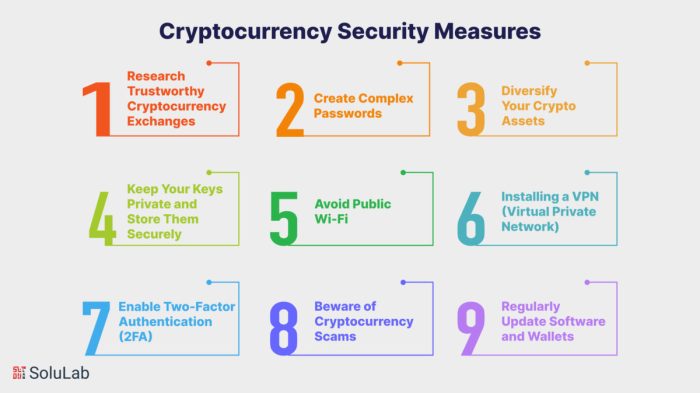
A strong password should be at least 12 characters long, ideally longer. It should include a mix of uppercase and lowercase letters, numbers, and symbols. Avoid using personal information like your birthday, name, or pet’s name. The more random and complex, the better. Think of it as a string of characters that has no meaning to anyone but you.
Generating and Securely Storing Passwords
While password managers are popular, let’s focus on methods
-excluding* them. You can generate strong passwords using online tools (ensure the tool is reputable and doesn’t log your passwords!). Once generated, write the password down on a piece of paper and store it in a secure location – a safe, a locked drawer, or even split across multiple locations.
Never store passwords digitally on your computer or phone in plain text. Consider using a passphrase – a sentence that’s easy for you to remember but difficult for others to guess.
Two-Factor Authentication (2FA)
Two-factor authentication adds an extra layer of security to your accounts. Even if someone steals your password, they’ll still need a second factor to gain access. SMS-based 2FA is the most common but also the least secure, as SMS messages can be intercepted. Authenticator apps (like Google Authenticator or Authy) generate time-based codes that are more secure. Hardware keys (like YubiKey) offer the highest level of security, as they require a physical device to verify your identity.
Common Phishing Tactics Targeting Crypto Investors
Phishing attacks are designed to trick you into revealing your login credentials or private keys. Here are some common tactics to watch out for:
- Fake Emails: Emails that appear to be from legitimate exchanges or wallet providers, asking you to verify your account or reset your password.
- Social Media Scams: Posts or messages offering free crypto or promising unrealistic returns.
- Impersonation: Attackers posing as customer support representatives on social media or through email.
- Urgency: Messages creating a sense of urgency, pressuring you to act quickly without thinking.
- Typos and Grammatical Errors: Poorly written emails or messages are often a sign of a phishing attempt.
Rule 2: Secure Your Digital Wallets
Your digital wallet is where you store your cryptocurrency, making it a prime target for hackers. Securing your wallet isn’t just about choosing the right type; it’s about understanding the setup process, backing up your data, and being aware of the risks associated with different wallet types. Think of your wallet as a physical safe – you need to choose a strong safe and protect the key.
Setting Up a Hardware Wallet
Hardware wallets are considered the most secure way to store your crypto. The setup process involves generating a seed phrase – a series of 12 or 24 random words. This seed phrase is your master key;
-never* share it with anyone. Write it down on a piece of paper and store it in a secure location, separate from your hardware wallet.
Test your backup by restoring your wallet on a different device to ensure the seed phrase works correctly.
Verifying Software Wallet Authenticity
Before downloading a software wallet, always verify its authenticity. Download it directly from the official website of the wallet provider. Check the website’s SSL certificate to ensure it’s valid. Look for reviews and feedback from other users. Be wary of wallets advertised on unofficial websites or through suspicious links.
Risks Associated with Browser Extension Wallets
Browser extension wallets (like MetaMask) are convenient, but they are also vulnerable to browser-based attacks. Malicious browser extensions can steal your private keys or intercept your transactions. Only install extensions from trusted sources. Regularly review your installed extensions and remove any that you don’t recognize. Consider using a separate browser profile specifically for crypto-related activities.
Creating Multiple Crypto Addresses
Don’t use the same crypto address for every transaction. Create multiple addresses for different purposes. Use one address for daily spending, another for long-term holding, and another for receiving funds from unknown sources. This helps to protect your privacy and limit the potential damage if one address is compromised.
Final Conclusion
So, there you have it – 7 rules to live by in the crypto space. It’s a lot to take in, I know, but remember that security isn’t a one-time setup. It’s an ongoing process of vigilance, education, and adaptation. The crypto world is constantly evolving, and so must your security practices.
Don’t fall for the trap of thinking “it won’t happen to me.” Take the time to implement these rules, stay informed about emerging threats, and prioritize the safety of your investments. A little effort now can save you a world of heartache (and lost funds) later. Investing in crypto is exciting, but protecting your investment is paramount.
Stay safe out there!
FAQ Insights
What’s the biggest mistake new crypto investors make regarding security?
Honestly? Overconfidence and reusing passwords. People think because it’s “digital” it’s somehow immune to basic hacking techniques. Using the same password across multiple platforms is a huge no-no, and not enabling 2FA is leaving the door wide open.
How often should I change my crypto passwords?
At least every 90 days, and
-immediately* if you suspect a breach. It’s a pain, I know, but it’s a crucial habit. Consider using a passphrase – a long, memorable sentence – instead of a traditional password.
What if I accidentally click on a phishing link?
First, disconnect your device from the internet immediately. Then, run a full scan with a reputable antivirus program. Change all your passwords, especially those for crypto exchanges and wallets. And report the phishing attempt to the relevant authorities.
Is it really necessary to use a VPN for crypto transactions?
It’s highly recommended, especially if you’re using public Wi-Fi. A VPN encrypts your internet connection, making it much harder for hackers to intercept your data. Think of it as adding an extra layer of privacy and security.
What’s the difference between a hot wallet and a cold wallet in simple terms?
A hot wallet is connected to the internet (like a mobile app wallet), making it convenient but more vulnerable. A cold wallet is offline (like a hardware wallet), making it much more secure but less accessible for frequent transactions. Think of a hot wallet as your everyday spending money and a cold wallet as your savings account.
