How Renewable Energy is Changing Bitcoin Mining isn’t just a tech story, it’s a pivotal shift in how we think about digital currencies and their impact on the planet. For years, Bitcoin mining has been synonymous with massive energy consumption, often powered by fossil fuels. But a growing wave of innovation and environmental awareness is pushing the industry towards a greener future, and the changes are happening faster than many realize.
The concerns around Bitcoin’s energy footprint are legitimate. The Proof-of-Work system, while secure, demands significant computational power. However, the narrative is evolving. Miners are increasingly recognizing the economic and ethical benefits of embracing renewable sources, and the industry is starting to see real, tangible progress. This isn’t just about ‘going green’ – it’s about long-term sustainability and securing Bitcoin’s future.
The Evolving Energy Landscape of Bitcoin Mining
Bitcoin, the pioneering cryptocurrency, has always been intertwined with energy. From its inception, the process of securing the network – mining – has demanded significant computational power, and therefore, electricity. Historically, this demand was largely met by fossil fuels, raising concerns about the environmental impact of this revolutionary technology. However, a shift is underway. The Bitcoin mining industry is increasingly exploring and adopting renewable energy sources, driven by a combination of environmental consciousness, economic incentives, and technological advancements.
This isn’t just a feel-good story; it’s a fundamental change that could redefine the future of Bitcoin and its role in a sustainable world.
The initial reliance on readily available and often cheaper fossil fuels created a problematic narrative. The Proof-of-Work (PoW) consensus mechanism, while incredibly secure, is inherently energy-intensive. As Bitcoin’s value and network hashrate grew, so did its energy footprint, attracting criticism from environmental groups and policymakers. This pressure, coupled with the growing availability and decreasing costs of renewable energy, has spurred a significant interest in sustainable mining solutions.
The transition isn’t without its challenges, but the momentum is undeniable.
Bitcoin Mining’s Energy Consumption in Context
Understanding the scale of Bitcoin’s energy use requires comparison. It’s often sensationalized, but placing it alongside other industries provides a more nuanced perspective. While Bitcoin’s annual energy consumption is substantial, it’s not necessarily out of line with established systems. The following table offers a comparative overview:
| Industry | Annual Energy Consumption (TWh) | Carbon Footprint (Million Tons CO2e) | Source |
|---|---|---|---|
| Bitcoin Mining (2024 est.) | 150-200 | 60-80 | Cambridge Bitcoin Electricity Consumption Index |
| Global Banking System | 250-300 | 100-150 | Accenture, Boston Consulting Group |
| Gold Mining | 120-180 | 30-50 | Earthworks, Paydirt |
| Data Centers (Global) | 200-300 | 150-200 | The Uptime Institute |
As you can see, Bitcoin’s energy consumption, while significant, is comparable to other large-scale industries. The key difference lies in the increasing potential to power Bitcoin mining with zero-emission renewable sources, something that’s far more challenging for industries like banking and gold mining.
Renewable Energy Sources Powering the Bitcoin Network
The beauty of Bitcoin mining lies in its geographic flexibility. Miners can theoretically set up operations anywhere with access to electricity and internet. This adaptability is crucial for the integration of renewable energy, as different regions offer varying renewable resources. The industry is moving beyond simply offsetting carbon emissions and actively seeking to
-run* on clean energy.
Hydroelectric Power: A Long-Standing Solution
Hydroelectric power has been the most prevalent renewable energy source used in Bitcoin mining to date. Its reliability and relatively low cost have made it an attractive option. Geographical concentrations are evident in regions with abundant hydropower resources, such as parts of China (historically, though now facing restrictions), Canada (Quebec and British Columbia), and Norway. These locations offer large-scale, established hydroelectric infrastructure, making it easier for miners to connect to the grid and secure long-term power purchase agreements.
However, it’s important to note that large hydroelectric projects can have their own environmental impacts, such as altering river ecosystems.
Solar Energy: Addressing Intermittency
Solar energy is gaining traction, particularly in regions with high solar irradiance, like the southwestern United States, Australia, and parts of South America. The primary challenge with solar is its intermittency – the sun doesn’t shine 24/7. Miners are addressing this through several strategies. One is co-location with battery storage systems, allowing them to store excess energy generated during peak sunlight hours and use it during periods of low or no sunlight.
Another is utilizing demand response systems (discussed later), which allow mining operations to adjust their energy consumption based on solar availability. The decreasing cost of solar panels and battery technology is making this option increasingly viable.
Wind Energy: Harnessing the Breeze

Source: advancedmining.io
Wind energy offers another promising avenue for sustainable Bitcoin mining. Suitable locations include areas with consistent wind patterns, such as the Great Plains of the United States, Patagonia in South America, and parts of Europe. Like solar, wind energy is intermittent, requiring similar solutions like battery storage and demand response. Infrastructure requirements include access to transmission lines to transport the electricity generated by wind farms to mining facilities.
The visual impact of wind turbines and potential impacts on bird populations are considerations that need to be addressed.
Geothermal Energy: Earth’s Internal Heat
Geothermal energy, harnessing heat from the Earth’s interior, presents a unique opportunity. It’s a baseload power source, meaning it can provide consistent energy 24/7, unlike solar and wind. Iceland, with its abundant geothermal resources, has become a hub for Bitcoin mining. However, geothermal resources are geographically limited, and the initial investment costs for developing geothermal power plants can be high.
Furthermore, geothermal energy can release small amounts of greenhouse gases, although significantly less than fossil fuels.
Emerging Renewable Sources
- Wave Energy: Utilizing the power of ocean waves, still in early stages of development but showing potential in coastal regions.
- Biomass: Converting organic matter into energy, offering a potential solution for utilizing waste products.
- Tidal Energy: Harnessing the energy of tides, similar to wave energy but more predictable.
- Green Hydrogen: Produced using renewable energy, hydrogen can be used in fuel cells to generate electricity.
Geographic Distribution of Renewable-Powered Mining
The location of Bitcoin mining operations is no longer solely dictated by cheap electricity. Access to renewable energy is becoming a primary driver, leading to a shift in the geographic distribution of mining activity. Miners are actively seeking out regions with favorable renewable energy mixes and supportive regulatory environments.
Leading Countries and Regions
Several countries and regions are emerging as leaders in utilizing renewable energy for Bitcoin mining:
- Iceland: Leverages abundant geothermal and hydroelectric power.
- Norway: Primarily utilizes hydroelectric power, benefiting from a long history of hydropower development.
- Canada (Quebec & British Columbia): Relies heavily on hydroelectric power.
- United States (Texas, Washington State): Increasingly utilizing wind and solar energy, particularly in Texas and Washington.
- Paraguay: Benefits from surplus hydroelectric power from the Itaipu Dam.
- Argentina: Utilizing stranded gas and exploring renewable options.
Factors Influencing Location Choices
Several factors influence the location choices of renewable-powered mining operations:
- Energy Costs: Renewable energy needs to be competitively priced compared to traditional sources.
- Regulatory Environment: Supportive policies, such as tax incentives and streamlined permitting processes, are crucial.
- Renewable Energy Availability: Access to abundant and reliable renewable resources is paramount.
- Grid Infrastructure: Adequate transmission capacity is needed to connect mining facilities to the grid.
- Political Stability: A stable political climate reduces investment risk.
Comparing Renewable Energy Mixes
The renewable energy mixes used in different mining hubs vary significantly. Iceland relies almost entirely on geothermal and hydroelectric power. Norway is predominantly hydroelectric. Texas is diversifying its renewable portfolio, with a growing share of wind and solar. This diversity is beneficial for the overall resilience of the Bitcoin network.
Stranded Renewable Energy Resources
Access to stranded renewable energy resources – energy that would otherwise be wasted – is a significant driver of mining location. A prime example is flared gas, a byproduct of oil and gas production that is often burned off due to lack of infrastructure to capture and utilize it. Miners can deploy mobile mining facilities to these locations, converting the flared gas into electricity to power their operations.
This not only reduces greenhouse gas emissions but also provides a revenue stream for oil and gas companies.
World Map Visualization
Imagine a world map where the concentration of renewable energy-powered Bitcoin mining facilities is visualized using a heat map. Areas with high concentrations would be shaded in warmer colors (red and orange), while areas with low concentrations would be shaded in cooler colors (blue and green). Icons representing different renewable energy sources (hydro, solar, wind, geothermal) would be overlaid on the map, indicating the primary energy source used in each region.
The map would also display data points showing the total hashrate originating from each region, providing a visual representation of the geographic distribution of Bitcoin’s computational power. This visualization would clearly demonstrate the growing trend of renewable energy adoption in the Bitcoin mining industry.
Economic Incentives and Challenges of Renewable Integration
Transitioning to renewable energy isn’t simply an altruistic endeavor for Bitcoin miners; it’s increasingly becoming an economically sound decision. However, the path isn’t without its hurdles. Understanding the economic incentives and challenges is crucial for accelerating the adoption of sustainable mining practices.
Carbon Pricing and Renewable Energy Credits
Carbon pricing mechanisms, such as carbon taxes and cap-and-trade systems, are influencing the economic viability of sustainable mining. By placing a cost on carbon emissions, these mechanisms make fossil fuel-based mining more expensive, incentivizing miners to switch to renewable sources. Renewable Energy Credits (RECs) provide another economic incentive. Miners can purchase RECs to offset their electricity consumption, demonstrating their commitment to renewable energy and potentially attracting environmentally conscious investors.
Cost Structures: Renewable vs. Fossil Fuels
Historically, fossil fuels have been cheaper than renewable energy. However, this is changing rapidly. The cost of solar and wind energy has plummeted in recent years, making them increasingly competitive with traditional sources. While the upfront investment costs for renewable energy infrastructure can be higher, the long-term operating costs are typically lower, as there are no fuel costs. Furthermore, the price volatility of fossil fuels introduces uncertainty, while renewable energy prices are more stable and predictable.
Integrating Intermittent Renewables
The biggest challenge of integrating intermittent renewable energy sources like solar and wind is ensuring a continuous power supply for mining farms. Mining operations require a stable and reliable electricity source to maintain optimal performance. Solutions include energy storage systems (batteries, pumped hydro), demand response systems, and diversifying renewable energy sources. The cost of these solutions needs to be factored into the economic equation.
Innovative Financing Models
Several innovative financing models are emerging to support renewable energy investments in the Bitcoin mining sector:
- Power Purchase Agreements (PPAs): Miners enter into long-term contracts with renewable energy developers to purchase electricity at a fixed price.
- Green Bonds: Bonds specifically earmarked for funding renewable energy projects.
- Decentralized Finance (DeFi): Utilizing DeFi platforms to raise capital for renewable energy investments.
- Impact Investing: Attracting investors who prioritize environmental and social impact alongside financial returns.
Financial Benefits and Drawbacks
| Factor | Renewable Energy | Fossil Fuels | Impact |
|---|---|---|---|
| Fuel Costs | Zero | Significant & Volatile | Lower Operating Costs |
| Upfront Investment | Higher | Lower | Higher Initial Capital Expenditure |
| Carbon Emissions | Minimal | High | Reduced Environmental Impact & Potential Carbon Tax Savings |
| Price Stability | Stable & Predictable | Volatile | Improved Financial Planning |
| Public Image | Positive | Negative | Enhanced Brand Reputation & Investor Appeal |
Technological Innovations Facilitating Renewable Integration
Beyond simply choosing renewable energy sources, technological advancements are playing a crucial role in optimizing the integration of renewables into Bitcoin mining operations. These innovations are addressing the challenges of intermittency, improving energy efficiency, and reducing waste.
Energy Storage Solutions

Source: website-files.com
Energy storage solutions are essential for stabilizing renewable energy supply. Batteries, particularly lithium-ion batteries, are becoming increasingly affordable and efficient. They can store excess energy generated during peak production periods and release it when renewable sources are unavailable. Pumped hydro storage, which involves pumping water uphill to a reservoir and then releasing it to generate electricity, is another viable option for large-scale energy storage.
The choice of storage technology depends on factors such as cost, capacity, and geographic suitability.
Demand Response Systems
Demand response systems allow mining operations to adjust their energy consumption based on renewable energy availability. When renewable energy is abundant, miners can increase their hashing power, maximizing their revenue. When renewable energy is scarce, they can reduce their hashing power or even temporarily shut down operations. This flexibility helps to balance the grid and optimize the utilization of renewable resources.
Sophisticated algorithms and real-time data analytics are used to predict renewable energy output and adjust mining operations accordingly.
Specialized Mining Hardware
The development of specialized mining hardware designed for energy efficiency is ongoing. ASIC (Application-Specific Integrated Circuit) miners are already significantly more energy-efficient than GPUs (Graphics Processing Units). Future innovations may focus on further reducing power consumption, optimizing heat dissipation, and improving compatibility with intermittent renewable energy sources. Manufacturers are also exploring the use of alternative materials and manufacturing processes to reduce the environmental impact of hardware production.
Smart Grid Technologies
Source: bitcoin.university
Smart grid technologies can optimize energy distribution and reduce waste in mining facilities. These technologies include advanced metering infrastructure (AMI), which provides real-time data on energy consumption, and distributed energy resource management systems (DERMS), which coordinate the operation of various energy sources and storage devices. Smart grids can also enable peer-to-peer energy trading, allowing miners to buy and sell excess energy directly from each other.
Hypothetical Scenario: 100% Renewable Operation
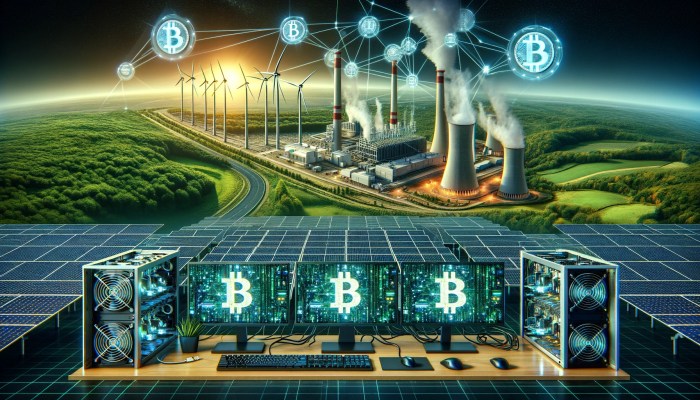
Imagine a mining farm located in a sunny region. The farm is powered by a combination of solar panels and battery storage. During the day, the solar panels generate electricity, which is used to power the mining operations and charge the batteries. When the sun goes down, the batteries provide a continuous power supply, ensuring uninterrupted mining. A demand response system monitors the grid and adjusts the mining farm’s energy consumption based on real-time renewable energy availability. If the grid is experiencing a surplus of renewable energy, the farm increases its hashing power. If the grid is constrained, the farm reduces its hashing power or temporarily shuts down. This integrated system allows the mining farm to operate on 100% renewable energy, minimizing its environmental impact and maximizing its economic efficiency.
Regulatory Landscape and Policy Impacts
Government regulations and policies play a significant role in shaping the adoption of renewable energy in Bitcoin mining. Supportive policies can incentivize sustainable practices, while restrictive policies can hinder progress. The regulatory landscape is evolving rapidly, with increasing scrutiny of the environmental impact of Bitcoin mining.
Government Regulations and Policies
Government regulations can encourage or hinder the adoption of renewable energy in Bitcoin mining. Regulations requiring miners to disclose their energy consumption and carbon emissions can increase transparency and accountability. Policies promoting renewable energy development, such as feed-in tariffs and renewable portfolio standards, can create a favorable environment for sustainable mining. Conversely, regulations restricting or banning Bitcoin mining can discourage investment in renewable energy infrastructure.
Jurisdictions Offering Incentives
Several jurisdictions are offering incentives for sustainable mining practices:
- Texas: Offers tax incentives for renewable energy projects and a relatively deregulated energy market.
- Norway: Provides access to abundant and affordable hydroelectric power.
- Iceland: Offers favorable tax rates and a supportive regulatory environment for renewable energy projects.
- Certain Canadian Provinces (Quebec, British Columbia): Provide access to low-cost hydroelectric power.
Carbon Taxes and Environmental Levies
Carbon taxes or other environmental levies could significantly impact the profitability of traditional mining operations. By increasing the cost of carbon emissions, these levies would incentivize miners to switch to renewable sources. However, the implementation of carbon taxes needs to be carefully considered to avoid unintended consequences, such as driving mining operations to jurisdictions with lax environmental regulations.
Industry Associations and Advocacy
Industry associations, such as the Bitcoin Mining Council, are playing an increasingly important role in advocating for responsible energy practices. These associations promote transparency, encourage the adoption of renewable energy, and engage with policymakers to develop sensible regulations. They also provide a platform for miners to share best practices and collaborate on sustainability initiatives.
Key Regulatory Considerations
- Energy Disclosure Requirements: Miners may be required to disclose their energy consumption and carbon emissions.
- Permitting Processes: Streamlined permitting processes for renewable energy projects are crucial.
- Renewable Energy Standards: Regulations requiring a certain percentage of electricity to come from renewable sources.
- Carbon Pricing Mechanisms: Carbon taxes or cap-and-trade systems.
- Environmental Impact Assessments: Assessments of the environmental impact of mining operations.
The Impact on Bitcoin’s Network Hashrate and Security
The shift to renewable energy sources has implications for Bitcoin’s network hashrate and security. While concerns have been raised about potential disruptions, the overall impact is likely to be positive, enhancing the resilience and decentralization of the network.
Impact on Network Hashrate
The shift to renewable energy sources could initially lead to a slight decrease in the network hashrate if some miners are forced to shut down due to regulatory restrictions or economic constraints. However, this is likely to be a temporary effect. As renewable energy infrastructure expands and costs continue to decline, the network hashrate is expected to rebound and even increase, as more miners are able to participate in the network sustainably.
The long-term trend is likely to be positive, with a more stable and resilient hashrate.
Implications for Network Security
A significant portion of mining shifting to regions with unstable energy grids could potentially pose a threat to network security. If miners in these regions are frequently forced to shut down due to power outages, it could lead to a temporary decrease in the network hashrate, making the network more vulnerable to attacks. However, geographically diverse renewable energy sources can mitigate this risk.
By distributing mining operations across multiple regions with different renewable energy mixes, the network becomes more resilient to localized disruptions.
Geographically Diverse Renewable Sources
Geographically diverse renewable energy sources enhance the resilience of the Bitcoin network by reducing its reliance on any single region or energy source. If one region experiences a disruption, the network can continue to operate normally, as miners in other regions can compensate for the lost hashing power. This diversification is crucial for maintaining the security and stability of the Bitcoin network.
Energy Costs and Mining Centralization
Energy costs are a major factor influencing mining centralization. Historically, low energy costs have attracted large-scale mining operations to specific regions, leading to centralization. Renewables can promote decentralization by making it more economically viable for miners to operate in a wider range of locations. As renewable energy becomes more accessible and affordable, it will empower smaller miners and reduce the dominance of large mining farms.
Relationship Between Renewable Adoption, Hashrate, and Security
Imagine a diagram illustrating the relationship between renewable energy adoption, network hashrate, and Bitcoin’s security. The diagram would show a positive feedback loop: increased renewable energy adoption leads to a more stable and resilient network hashrate, which in turn enhances Bitcoin’s security. The diagram would also highlight the importance of geographic diversification, showing how distributing mining operations across multiple regions with different renewable energy mixes further strengthens the network’s security.
The diagram would visually demonstrate that sustainable mining is not just an environmental imperative but also a strategic advantage for the Bitcoin network.
Last Point
The transition to renewable energy in Bitcoin mining is more than just a trend; it’s a fundamental reshaping of the industry. From hydroelectric power in remote regions to innovative solar and wind farms, miners are actively seeking sustainable solutions. While challenges remain – intermittency, cost, and regulatory hurdles – the economic incentives and technological advancements are steadily tipping the scales in favor of renewables.
Ultimately, a greener Bitcoin network isn’t just better for the environment, it’s potentially more secure and decentralized. By diversifying energy sources and reducing reliance on centralized grids, the network becomes more resilient. The future of Bitcoin mining isn’t about
-if* renewables will play a role, but
-how* significant that role will become, and the current trajectory points towards a remarkably sustainable future.
Essential Questionnaire
What is the biggest hurdle to using renewables for Bitcoin mining?
Intermittency is a major challenge. Solar and wind power aren’t constant, and Bitcoin mining requires a consistent energy supply. Energy storage solutions like batteries and demand response systems are key to overcoming this.
Are miners actually
-profiting* from using renewable energy?
Yes, increasingly so. Renewable energy sources can be cheaper than fossil fuels in certain locations, and carbon credits/pricing can provide additional revenue streams. Plus, a ‘green’ image can attract investors and customers.
How does this impact the average Bitcoin user?
A more sustainable Bitcoin network is a more responsible and potentially more stable network. It addresses ethical concerns and could attract wider adoption. It also reduces the risk of regulatory backlash.
What is ‘stranded energy’ and how does it relate to mining?
Stranded energy refers to energy sources that are difficult or expensive to transport to traditional consumers – like flared gas at oil wells. Bitcoin miners can locate near these sources, utilizing energy that would otherwise be wasted.
Could renewable energy make Bitcoin mining more decentralized?
Potentially. Lower energy costs from renewables could allow smaller miners to compete, reducing the dominance of large mining farms. Geographically diverse renewable sources also contribute to decentralization.
