Remember the frustration of waiting
-ages* for a Bitcoin transaction to confirm, especially when you just want to grab a quick coffee online? Or worse, seeing the fee skyrocket because everyone else is trying to transact at the same time? That’s the scalability problem Bitcoin faces, and it’s a big one. For years, developers have been searching for solutions, and one of the most promising is the Lightning Network.
It’s not about changing Bitcoin itself, but building a clever layer
-on top* of it, and it’s changing how we think about Bitcoin transactions.
This isn’t some futuristic pipe dream either. The Lightning Network is here, it’s growing, and it’s already enabling faster, cheaper Bitcoin payments. We’ll break down exactly how it works, from the core concepts of payment channels to the nitty-gritty details of routing and security. Think of it as building super-fast express lanes on top of Bitcoin’s existing roads.
The Lightning Network Explained: Making Bitcoin Faster
Bitcoin, the pioneering cryptocurrency, has always held the promise of a decentralized, peer-to-peer electronic cash system. However, as its popularity grew, a significant challenge emerged: scalability. The original Bitcoin blockchain, while secure and reliable, struggled to handle a large volume of transactions quickly and affordably. This led to slower confirmation times and higher fees, hindering its potential for everyday use.
The Lightning Network is an innovative solution built on top of Bitcoin, designed to address these scalability issues and unlock Bitcoin’s potential as a truly global payment network.
This article will delve into the intricacies of the Lightning Network, explaining its core concepts, how it works, and its potential to revolutionize the way we transact with Bitcoin. We’ll explore the challenges Bitcoin faced, the ingenious solutions the Lightning Network offers, and what the future holds for this exciting technology.
Introduction to Bitcoin’s Scalability Challenges
Source: ctfassets.net
Bitcoin’s original design, while revolutionary, inherently limits its transaction throughput. The blockchain operates on a system of blocks, each containing a limited amount of transaction data. The block size, initially set at 1MB, dictates how many transactions can fit into a single block. Furthermore, Bitcoin’s block time – the average time it takes to create a new block – is approximately 10 minutes.
These two factors combined mean that Bitcoin can only process around 3-7 transactions per second (TPS). This is significantly lower than traditional payment networks like Visa, which can handle thousands of TPS.
When demand for Bitcoin transactions exceeds the network’s capacity, a backlog forms. This congestion leads to increased competition for inclusion in the next block, driving up transaction fees. Users are forced to bid higher fees to incentivize miners to prioritize their transactions. During periods of high network activity, even small transactions can become prohibitively expensive.
Prior to the Lightning Network, several attempts were made to address Bitcoin’s scalability issues. These included increasing the block size (leading to the Bitcoin Cash fork), implementing Segregated Witness (SegWit) to optimize block space, and exploring sidechains. While SegWit provided some improvements, it wasn’t a complete solution. The debate over increasing the block size proved contentious, ultimately leading to a split in the Bitcoin community.
Imagine Sarah wants to buy a coffee for $3 using Bitcoin. During a period of high network congestion, the transaction fee might be $5 or even higher. Suddenly, a simple coffee purchase costs $8! Sarah is understandably frustrated, and the high fee makes using Bitcoin impractical for small, everyday transactions. This illustrates the real-world impact of Bitcoin’s scalability limitations on the user experience.
The Core Concept of Payment Channels
The foundation of the Lightning Network lies in the concept of payment channels. These channels allow two parties to conduct multiple transactions off-chain, without broadcasting each transaction to the entire Bitcoin blockchain. The core principle involves locking a certain amount of Bitcoin into a multi-signature address, requiring both parties to agree before funds can be moved.
Once the channel is established, the two parties can repeatedly update the balance distribution within the channel by creating and signing new transaction agreements. These agreements aren’t broadcast to the blockchain immediately; instead, they represent a commitment to a specific balance split. Only the final, agreed-upon balance is settled on the blockchain when the channel is closed. This significantly reduces the burden on the main Bitcoin network.
Here’s a comparison of on-chain and off-chain transactions:
| Feature | On-Chain | Off-Chain |
|---|---|---|
| Transaction Speed | Slow (10+ minutes) | Instant |
| Transaction Fees | High (especially during congestion) | Very Low |
| Scalability | Limited | High |
| Privacy | Lower (transactions are public) | Higher (transactions are not immediately public) |
Commitment transactions are crucial for security. Each time a balance update occurs, both parties create and sign a new commitment transaction reflecting the new distribution of funds. These transactions are held privately until one party decides to close the channel. If either party attempts to broadcast an older, outdated commitment transaction, the other party can use a special mechanism to claim all the funds in the channel, preventing fraud.
How the Lightning Network Builds on Payment Channels
Source: web3universe.today
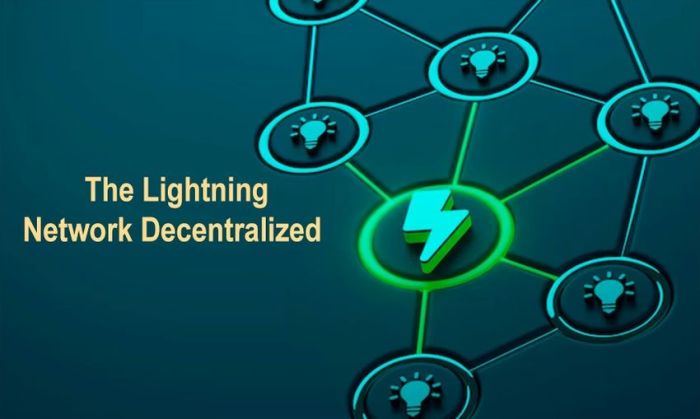
The Lightning Network takes the concept of payment channels and extends it to a network of users. Instead of requiring a direct channel between every pair of participants, the network allows payments to be routed through intermediate nodes. This creates a mesh-like network where funds can flow from sender to receiver even if they don’t have a direct channel open.
Routing payments involves finding a path through the network with sufficient capacity to accommodate the desired transaction amount. Each node along the path acts as an intermediary, forwarding the payment to the next node until it reaches the receiver. The network utilizes routing algorithms to identify the most efficient and reliable paths.
Here’s a step-by-step guide on how a payment is routed:
- Alice wants to pay Bob 100 satoshis.
- Alice’s Lightning wallet identifies a path through the network: Alice -> Carol -> David -> Bob.
- Alice’s wallet creates a series of HTLCs (explained in the next section) along the path, locking funds at each node.
- Alice sends the initial payment to Carol.
- Carol verifies the payment and forwards it to David.
- David verifies the payment and forwards it to Bob.
- Bob receives the payment and reveals the secret key that unlocks the HTLCs, allowing each node to claim their funds.
Imagine a diagram illustrating a Lightning Network payment route with four nodes: Alice, Carol, David, and Bob. Alice has a channel open with Carol (capacity 500 satoshis), Carol has a channel open with David (capacity 300 satoshis), and David has a channel open with Bob (capacity 200 satoshis). The payment of 100 satoshis flows from Alice to Carol, then to David, and finally to Bob.
Arrows indicate the direction of the payment, and the channel capacities are labeled on each connection. The diagram would visually demonstrate how funds are routed through the network, utilizing existing channel capacity.
Hashed TimeLock Contracts (HTLCs) and Atomic Swaps
Hashed TimeLock Contracts (HTLCs) are the cornerstone of secure payments across multiple channels in the Lightning Network. They ensure that either the payment reaches its intended recipient, or the funds are returned to the sender. HTLCs enforce conditional payments based on a cryptographic hash, preventing intermediaries from stealing funds.
The process works by creating a secret key and generating a hash of that key. The sender reveals the hash to the receiver and each intermediary node along the payment path. The receiver can claim the funds by revealing the secret key that corresponds to the hash. However, each HTLC includes a time lock. If the receiver doesn’t reveal the secret key within a specified timeframe, the funds are automatically returned to the sender.
Consider this scenario: Alice is sending funds to Bob through Carol. Carol could potentially steal the funds if she receives them. However, with an HTLC, Carol can only claim the funds if she knows the secret key. Bob is the only one who knows the secret key, and he will only reveal it after receiving the funds from David (the next node in the route).
This creates a chain of conditional payments, ensuring that no intermediary can steal the funds.
Here are the key components of an HTLC:
- Hashlock: A cryptographic hash of a secret key, shared with all participants in the payment route.
- Timelock: A time limit within which the receiver must reveal the secret key to claim the funds.
- Secret Reveal: The process of the receiver revealing the secret key to unlock the funds and complete the payment.
Channel Capacity and Liquidity
Channel capacity is determined by the initial on-chain transaction used to open the channel. The amount of Bitcoin locked into the multi-signature address defines the maximum amount that can be transacted within that channel. A larger initial deposit results in a higher channel capacity.
Liquidity is crucial for successful routing in the Lightning Network. It refers to the available balance within each channel. If a channel doesn’t have enough inbound liquidity (funds flowing towards a node) or outbound liquidity (funds flowing away from a node), it can prevent a payment from completing, even if the channel has sufficient overall capacity. Think of it like a highway – even if the highway is wide enough, a traffic jam (lack of liquidity) can still block the flow of cars (payments).
Here are some scenarios where insufficient liquidity can prevent a payment:
- Alice wants to pay Bob 500 satoshis, but the channel between Alice and Carol only has 300 satoshis of outbound liquidity.
- Carol wants to forward a payment of 200 satoshis to David, but her channel with David only has 100 satoshis of inbound liquidity.
Here’s a comparison of strategies for managing channel liquidity:
| Strategy | Description | Advantages | Disadvantages |
|---|---|---|---|
| Rebalancing | Periodically moving funds between channels to optimize liquidity. | Improves payment success rates. | Requires on-chain transactions and fees. |
| Looping | Creating loops of channels to redistribute liquidity. | Efficiently redistributes liquidity without external inputs. | Can be complex to set up. |
| Automated Liquidity Providers | Services that automatically manage channel liquidity for a fee. | Convenient and reduces manual effort. | Relies on a third party. |
Opening and Closing Channels

Source: smartliquidity.info
Opening a Lightning Network channel involves an on-chain transaction that locks funds into a multi-signature address. Both parties must cooperate to create and sign this transaction. The transaction specifies the initial channel capacity and the funding source. Once confirmed on the Bitcoin blockchain, the channel is open and ready for off-chain transactions.
Closing a channel can be done in two ways: cooperatively or non-cooperatively. A cooperative close involves both parties agreeing on the final balance distribution and signing a closing transaction. This is the fastest and most cost-effective method. A non-cooperative close, on the other hand, allows either party to unilaterally close the channel by broadcasting their latest commitment transaction to the blockchain.
This triggers a time-delay, allowing the other party to dispute the transaction if they believe it’s fraudulent.
Channel closing has implications for on-chain transaction fees. A cooperative close typically results in a single on-chain transaction, while a non-cooperative close may require multiple transactions if a dispute arises. Non-cooperative closes are generally more expensive due to the potential for disputes and the associated transaction fees.
Imagine a user, David, wants to close a channel with Alice but Alice is unresponsive. David initiates a non-cooperative channel close. This starts a 48-hour time delay. During this period, Alice has the opportunity to broadcast an older commitment transaction if she believes David is attempting to cheat. If Alice doesn’t respond within the 48-hour window, David can safely broadcast his closing transaction, settling the channel balance on the blockchain.
This process, while secure, incurs on-chain transaction fees and can be frustrating for both parties.
Routing Algorithms and Network Topology
Source routing plays a crucial role in finding paths across the Lightning Network. In source routing, the sender (Alice) determines the entire route the payment will take, rather than relying on each node to independently decide where to forward the payment. This gives the sender more control and allows them to choose the most efficient and reliable path.
Several metrics are used to evaluate the quality of a payment route. These include cost (the total fees charged by the nodes along the path), reliability (the probability that the payment will successfully reach its destination), and latency (the time it takes for the payment to complete). Routing algorithms aim to find the optimal route based on these metrics.
The network topology – the arrangement of channels and nodes – significantly impacts payment success rates. A densely connected network with many channels and nodes offers more routing options and increases the likelihood of finding a path. Conversely, a sparsely connected network with limited channels can lead to routing failures, especially for larger payments.
Visualize a network map of the Lightning Network. Areas with a high concentration of nodes and channels appear as bright clusters, representing high connectivity. Sparse areas with few connections appear as darker regions, indicating potential bottlenecks. The map would highlight the uneven distribution of liquidity and connectivity across the network, illustrating how network topology influences payment success rates.
Privacy Considerations in the Lightning Network
Off-chain transactions on the Lightning Network offer enhanced privacy compared to on-chain Bitcoin transactions. On the blockchain, all transactions are publicly visible and linked to Bitcoin addresses. On the Lightning Network, transactions within a channel are not immediately broadcast to the blockchain, making it more difficult to track the flow of funds.
However, routing can potentially reveal information about payment patterns. While the specific amount of a payment is not publicly visible, the nodes along the route can infer information about the sender, receiver, and the frequency of payments. This is because each node sees the payment flowing through their channel.
Several techniques can enhance privacy on the Lightning Network. Trampoline routing, for example, involves routing payments through multiple intermediary nodes that don’t necessarily have a direct channel connection to the sender or receiver. This obfuscates the payment path and makes it more difficult to trace the transaction. Other techniques include using channel jamming and dust attacks to further protect privacy.
Here’s a list of privacy trade-offs:
- Privacy vs. Usability: More privacy-focused techniques, like trampoline routing, can increase latency and complexity.
- Privacy vs. Cost: Some privacy enhancements may require additional fees.
- Privacy vs. Reliability: Obfuscating the payment path can sometimes reduce the likelihood of successful routing.
Practical Applications and Use Cases
The Lightning Network is unlocking a wide range of practical applications for Bitcoin. One prominent use case is micro-payments for content. Traditional payment systems often have high transaction fees that make it impractical to pay for small amounts of content, such as individual articles or streaming minutes. The Lightning Network’s low fees enable seamless micro-payments, allowing users to pay only for the content they consume.
The Lightning Network also has the potential to enable new business models. For example, it could facilitate instant, low-cost payments for services like streaming music, online gaming, and peer-to-peer marketplaces. It can also be used for machine-to-machine payments, such as paying for electric vehicle charging or automated services.
Imagine a news website offering pay-per-article access using the Lightning Network. A user wants to read a single article that costs $0.10. Using traditional payment methods, the transaction fee might be higher than the article price. With the Lightning Network, the user can instantly pay $0.10 with a negligible fee, gaining access to the article. This provides a convenient and affordable way for users to consume content and for publishers to monetize their work.
Here’s a table outlining potential use cases:
| Use Case | Description | Benefits |
|---|---|---|
| Micro-payments for Content | Paying for individual articles, videos, or streaming minutes. | Enables affordable access to content, new monetization models. |
| Instant Payments for Services | Paying for online gaming, streaming music, or peer-to-peer marketplaces. | Faster and cheaper transactions, improved user experience. |
| Machine-to-Machine Payments | Automated payments for services like EV charging or IoT devices. | Enables seamless and automated transactions. |
Current State and Future Development
As of late 2023/early 2024, the Lightning Network has experienced significant growth. The network boasts thousands of nodes and tens of thousands of channels, with a total capacity exceeding several thousand Bitcoin. While still a relatively young technology, the Lightning Network is rapidly maturing and gaining adoption.
Ongoing development efforts are focused on improving scalability, usability, and security. Researchers and developers are working on solutions to address challenges such as channel management, liquidity constraints, and routing efficiency. Improvements to the underlying protocols and wallet software are constantly being released.
Potential future features include atomic multi-path payments, which would allow payments to be split across multiple routes simultaneously, increasing the likelihood of success and improving liquidity. Other advancements include improved privacy techniques and more sophisticated routing algorithms.
Despite its progress, the Lightning Network faces several challenges. Channel management can be complex, requiring users to actively manage their channels and ensure sufficient liquidity. Liquidity constraints remain a significant hurdle, especially for larger payments. Furthermore, the network’s complexity can make it challenging for new users to understand and adopt. Addressing these challenges will be crucial for the Lightning Network to reach its full potential.
Final Thoughts
So, there you have it – the Lightning Network, a fascinating solution to Bitcoin’s scalability challenges. It’s a complex system, sure, but the core idea is beautifully simple: move transactions off-chain to speed things up and reduce fees. It’s not a perfect solution, and there are still hurdles to overcome like liquidity and network growth, but the potential is enormous.
The Lightning Network isn’t just about faster coffee purchases; it’s about unlocking new possibilities for micro-payments, streaming payments, and a whole host of innovative applications. It’s a vital piece of Bitcoin’s future, and watching it evolve is genuinely exciting. It’s a testament to the power of clever engineering and the enduring spirit of decentralization.
FAQ Resource
What happens if one party in a Lightning channel goes offline?
The channel remains open and usable by the online party. Payments can still be routed through the channel as long as one side is available to cooperate. The offline party doesn’t need to be constantly online for the channel to function.
Is the Lightning Network truly private?
While more private than on-chain transactions, it’s not perfectly private. Routing nodes can potentially infer information about payment patterns. Techniques like trampoline routing are being developed to enhance privacy further.
What are the risks of opening a Lightning channel?
The main risk is locking up Bitcoin in the channel. You need to ensure you trust the counterparty or understand the cooperative and non-cooperative close procedures. There’s also the risk of channel imbalances if one party consistently sends or receives more funds.
How does the Lightning Network handle disputes?
Disputes are settled on the Bitcoin blockchain through a cooperative or non-cooperative channel close. A non-cooperative close involves a time-lock, giving both parties a chance to broadcast their final channel state. The state that’s confirmed first on the blockchain wins.
Can I use the Lightning Network with any Bitcoin wallet?
Not all wallets support the Lightning Network. You’ll need a wallet specifically designed to work with Lightning, such as Muun, Phoenix, or Zap. Many popular wallets are adding Lightning support, so the options are growing.
