So, you’re thinking about dipping your toes into the world of crypto? It’s exciting, isn’t it? Everyone’s talking about Bitcoin, Ethereum, and the potential for huge returns. But before you jump in headfirst, let’s be real – it’s also a bit of a wild west out there. There are risks, scams, and a whole lot of confusing jargon.
It’s easy to stumble, especially when you’re just starting out.



This isn’t meant to scare you off, but to prepare you. We’re going to break down the ten most common mistakes new crypto investors make, and more importantly, how to avoid them. Think of this as your friendly guide to navigating the crypto landscape with a little more confidence and a lot less worry. We’ll cover everything from spotting scams to understanding fees, and making sure you don’t invest more than you can comfortably lose.
Introduction: The Allure and Risks of Cryptocurrency
Cryptocurrency has exploded in popularity over the last decade, moving from a niche interest for tech enthusiasts to a mainstream topic of conversation. It’s easy to see why. The potential for high returns, the promise of decentralized finance, and the innovative technology behind it all are incredibly appealing. However, this exciting new world also comes with significant risks. It’s a landscape ripe with scams, volatility, and complexities that can easily overwhelm newcomers.
Understanding these risks and avoiding common pitfalls is crucial for anyone considering investing in digital assets.
The benefits are clear: potential for high growth, 24/7 trading, and increased financial freedom. But alongside these opportunities lie dangers like market manipulation, security breaches, and the sheer complexity of understanding blockchain technology. This article will guide you through ten common mistakes that crypto beginners make, helping you navigate this space with more confidence and protect your investments.
We’ll cover everything from falling for “get rich quick” schemes to neglecting basic security measures. By understanding these pitfalls, you can significantly increase your chances of success and avoid costly errors. Here are the ten mistakes we’ll be exploring: Falling for “Get Rich Quick” Schemes, Neglecting Thorough Research (DYOR), Ignoring Wallet Security, Investing More Than You Can Afford to Lose, Emotional Trading & FOMO, Not Understanding Transaction Fees, Falling for Phishing Attacks, Ignoring Tax Implications, Relying Solely on Social Media for Information.
Falling for “Get Rich Quick” Schemes
The crypto space, unfortunately, attracts a lot of individuals promising unrealistic returns with little to no effort. These “get rich quick” schemes prey on the desire for fast profits, often targeting those new to the market. It’s vital to approach any investment opportunity with a healthy dose of skepticism and understand that legitimate crypto investments require time, research, and a degree of risk tolerance.
Common tactics used in crypto scams include pump and dumps, where a group artificially inflates the price of a coin before selling their holdings for a profit, leaving others with losses. Ponzi schemes, disguised as crypto projects, pay early investors with money from new investors, eventually collapsing when recruitment slows. Be wary of projects promising guaranteed returns, unusually high APYs, or overly aggressive marketing.
Critical evaluation is key – if it sounds too good to be true, it almost certainly is.
To avoid hype, focus on the fundamentals of a project. What problem does it solve? Is there a real-world use case? Who is the team behind it? Don’t let social media buzz or influencer endorsements sway your judgment.
Do your own research and make informed decisions based on facts, not promises.
Here’s a comparison of legitimate projects versus common scam indicators:
| Project Feature | Scam Indicator | Explanation | Example |
|---|---|---|---|
| Transparent Team | Anonymous Team | Legitimate projects usually have a publicly known team with verifiable backgrounds. | Project X claims its developers are “industry experts” but provides no names or LinkedIn profiles. |
| Clear Roadmap | Vague or Non-Existent Roadmap | A well-defined roadmap Artikels the project’s goals and milestones. | Project Y promises “revolutionary technology” but offers no details on its development plan. |
| Active Community | Bot-Filled or Inactive Community | A genuine community engages in constructive discussion and provides feedback. | Project Z’s Telegram group is filled with bots and repetitive messages. |
| Whitepaper with Technical Details | No Whitepaper or a Poorly Written One | A whitepaper explains the project’s technology, use case, and tokenomics. | Project A has no whitepaper or a document filled with jargon and empty promises. |
Neglecting Thorough Research (DYOR)
Source: blockmeadow.com
“DYOR” – Do Your Own Research – is a mantra in the crypto world for a very good reason. Investing in any cryptocurrency without understanding the underlying technology, the team, and the market potential is akin to gambling. It’s not enough to simply hear about a coin from a friend or see it trending on social media. You need to delve deeper and form your own informed opinion.
Fortunately, there are numerous resources available for researching crypto projects. Start with the project’s whitepaper, which should provide a detailed overview of its goals, technology, and tokenomics. Explore the project’s roadmap to understand its development plans. Investigate the team’s backgrounds and experience – LinkedIn is a valuable tool for this. Look for independent audits of the project’s code to assess its security.
Websites like CoinMarketCap and CoinGecko provide basic information and links to project websites and social media channels.
When assessing a project, consider its technology. Is it innovative and scalable? What problem does it solve, and is there a genuine need for its solution? Analyze its use case. Is it practical and sustainable?
Evaluate its market potential. Is the target market large enough to support the project’s growth? Consider the competition. Are there other projects attempting to solve the same problem, and how does this project differentiate itself?
Here’s a checklist for evaluating a crypto project’s legitimacy and viability:
- Team: Are the team members publicly known and experienced?
- Whitepaper: Is there a comprehensive whitepaper explaining the project’s goals and technology?
- Roadmap: Does the project have a clear and realistic roadmap?
- Technology: Is the technology innovative and scalable?
- Use Case: Is there a real-world use case for the project?
- Market Potential: Is the target market large enough to support the project’s growth?
- Community: Is there an active and engaged community?
- Code Audit: Has the project’s code been audited by a reputable firm?
- Tokenomics: Is the token distribution fair and sustainable?
- Competition: How does the project differentiate itself from its competitors?
Ignoring Wallet Security
Your crypto wallet is essentially your digital bank account. Protecting it is paramount. Losing access to your wallet can mean losing all your cryptocurrency. There are several types of wallets available, each with its own advantages and disadvantages. Hardware wallets, like Ledger and Trezor, are considered the most secure as they store your private keys offline.
Software wallets, such as Exodus and Trust Wallet, are convenient but less secure as they are stored on your computer or mobile device. Exchange wallets, offered by platforms like Coinbase and Binance, are the least secure as you don’t have control over your private keys.
Regardless of the type of wallet you choose, strong security practices are essential. Use strong, unique passwords for your wallet and any associated accounts. Enable two-factor authentication (2FA) whenever possible, adding an extra layer of security. Most importantly, securely manage your seed phrase – a 12 or 24-word phrase that allows you to recover your wallet if you lose access.
Never share your seed phrase with anyone, and never enter it on any website or application.
Storing your seed phrase offline is crucial. Write it down on a piece of paper and store it in a safe, secure location. Consider using a metal seed phrase backup tool for added durability. Avoid storing your seed phrase digitally, such as on your computer or in the cloud. Remember, if someone gains access to your seed phrase, they can steal all your cryptocurrency.
Losing your private keys or seed phrase is like throwing your money away. There is no customer support to help you recover your funds. Treat your wallet security with the utmost seriousness, as it is your sole responsibility to protect your assets. Always double-check addresses before sending cryptocurrency, and be wary of phishing attempts.
Investing More Than You Can Afford to Lose
The cryptocurrency market is notoriously volatile. Prices can swing dramatically in short periods, and there’s always the risk of losing your entire investment. This inherent volatility makes it crucial to only invest what you can comfortably afford to lose. Treat crypto investments as high-risk, speculative assets, and never invest money that you need for essential expenses like rent, food, or healthcare.
Understanding your risk tolerance is key. Are you comfortable with the possibility of significant losses? Or do you prefer more conservative investments? Your risk tolerance will influence the amount of your portfolio that you allocate to cryptocurrency. Diversification is also essential.
Don’t put all your eggs in one basket. Spread your investments across different cryptocurrencies and other asset classes to reduce your overall risk.
Here are some alternative investment options to consider alongside cryptocurrency:
- Stocks: Offer long-term growth potential and diversification.
- Bonds: Provide a more stable income stream and lower risk.
- Real Estate: Can offer both income and appreciation potential.
- Mutual Funds: Provide diversification and professional management.
- Exchange-Traded Funds (ETFs): Offer diversification and low fees.
- Commodities: Can provide a hedge against inflation.
Emotional Trading & FOMO
Source: tradedog.io
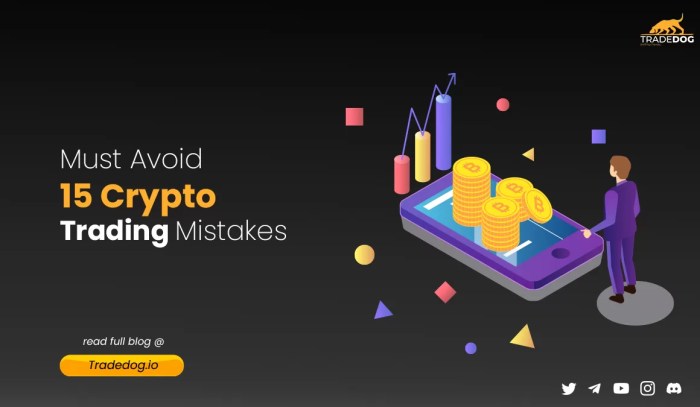
The cryptocurrency market is highly susceptible to emotional trading, driven by fear, greed, and the fear of missing out (FOMO). Making investment decisions based on emotions rather than logic can lead to poor outcomes. FOMO, in particular, can cause you to buy high during a market rally, only to see the price crash shortly after. Panic selling, driven by fear, can lead you to sell low during a market downturn, locking in losses.
Developing a trading strategy and sticking to it, regardless of market fluctuations, is crucial. Define your investment goals, risk tolerance, and time horizon. Set clear entry and exit points based on your analysis, and avoid making impulsive decisions. Dollar-cost averaging (DCA) can be a helpful strategy for mitigating emotional trading. DCA involves investing a fixed amount of money at regular intervals, regardless of the price.
This helps to smooth out your average purchase price and reduce the impact of volatility.
While technical indicators can provide insights into potential market trends, they should not be relied upon as a guaranteed predictor of future price movements. Indicators like moving averages, relative strength index (RSI), and MACD can help you identify potential entry and exit points, but they should be used in conjunction with fundamental analysis and a well-defined trading strategy. Remember, past performance is not indicative of future results.
Not Understanding Transaction Fees
Cryptocurrency transactions aren’t free. Various fees are associated with sending and receiving crypto, and understanding these fees is essential for managing your costs. Network fees, also known as gas fees, are paid to the network to process your transaction. Exchange fees are charged by cryptocurrency exchanges for facilitating trades. These fees can vary significantly depending on the blockchain, the exchange, and the network congestion.
Transaction fees can differ greatly across different blockchains. Bitcoin typically has higher fees than Ethereum, especially during periods of high network activity. Layer-2 solutions, like the Lightning Network for Bitcoin and Polygon for Ethereum, offer lower fees and faster transaction times. Exchange fees also vary, with some exchanges charging lower fees than others. It’s important to compare fees across different blockchains and exchanges before making a transaction.
To optimize transaction fees, consider the following: Avoid sending small amounts of cryptocurrency, as the network fee may outweigh the transaction value. Time your transactions to avoid periods of high network congestion. Use a fee estimator to determine the optimal fee for your transaction. Explore layer-2 solutions for lower fees and faster transaction times.
| Blockchain | Average Fee | Factors Affecting Fee | Optimization Tips |
|---|---|---|---|
| Bitcoin | $5 – $20 | Network congestion, transaction size | Use the Lightning Network for smaller transactions, time transactions during off-peak hours. |
| Ethereum | $2 – $50 | Network congestion, transaction complexity | Use Layer-2 solutions like Polygon, time transactions during off-peak hours. |
| Binance Smart Chain | $0.10 – $1 | Network congestion, transaction size | Use the Binance Bridge for transfers, time transactions during off-peak hours. |
| Solana | $0.00025 | Network congestion | Solana generally has very low fees. |
Falling for Phishing Attacks
Phishing attacks are a common tactic used by scammers to steal crypto assets. These attacks typically involve deceptive emails, websites, or social media posts that trick you into revealing your private keys or other sensitive information. Scammers often impersonate legitimate companies or individuals, creating a sense of urgency or trust to manipulate you into taking action.
To identify phishing attempts, be wary of unsolicited emails or messages asking for your private keys or login credentials. Always verify the website URL before entering any sensitive information. Look for subtle misspellings or grammatical errors in emails and websites. Be cautious of links sent through social media or messaging apps. Never click on links from unknown sources.
Enable two-factor authentication (2FA) on all your crypto accounts for an extra layer of security.
Always double-check the website URL to ensure it matches the legitimate website. Scammers often create fake websites that closely resemble the real ones. Verify the email address of the sender to ensure it’s legitimate. Be skeptical of any offer that seems too good to be true. If you’re unsure about the legitimacy of an email or website, contact the company or individual directly through a known and trusted channel.
Here’s an example of a typical phishing email:
Subject: Urgent Security Alert – Coinbase Account Verification
Body: Dear Coinbase User, We have detected suspicious activity on your account. To ensure your account security, please verify your identity by clicking on the link below: [Fake Coinbase Link]. Failure to verify your account within 24 hours may result in account suspension.
Red Flags: Generic greeting (“Dear Coinbase User”), sense of urgency (“within 24 hours”), suspicious link (hover over the link to reveal the actual URL), grammatical errors, and request for sensitive information.
Ignoring Tax Implications
Cryptocurrency transactions are generally taxable events. Buying, selling, or exchanging cryptocurrency can trigger capital gains or losses, which must be reported to your tax authorities. Ignoring these tax implications can lead to penalties and legal issues. Tax regulations surrounding cryptocurrency are complex and vary depending on your jurisdiction, so it’s essential to understand your obligations.
Keeping accurate records of all your crypto transactions is crucial. Track the date, time, amount, and price of each transaction. Use a crypto tax software or spreadsheet to help you organize your data. Be aware of different tax treatments for different types of crypto transactions, such as trading, staking, and mining. Consult with a tax professional specializing in cryptocurrency to ensure you’re complying with all applicable regulations.
Here are some resources for understanding crypto tax regulations in your jurisdiction:
- IRS (United States): https://www.irs.gov/cryptocurrency
- HMRC (United Kingdom): https://www.gov.uk/guidance/cryptoassets-tax
- CRA (Canada): https://www.canada.ca/en/revenue-agency/services/tax/digital-currency.html
Here are some common crypto tax-related questions and answers:
- Q: Do I have to pay taxes on crypto I bought and held for a long time? A: Yes, if you sell or exchange the crypto, you may have to pay capital gains taxes.
- Q: What if I trade one cryptocurrency for another? A: This is considered a taxable event, and you may have to report a capital gain or loss.
- Q: Can I deduct crypto losses from my taxes? A: Yes, you may be able to deduct crypto losses to offset capital gains.
- Q: Do I need to report crypto income from staking or mining? A: Yes, crypto income from staking or mining is generally considered taxable income.
Relying Solely on Social Media for Information

Source: trakx.io
Social media platforms are rife with misinformation and biased opinions regarding cryptocurrency. While they can be a useful tool for staying up-to-date on market trends, relying solely on social media for investment information is a recipe for disaster. The echo chambers and hype cycles prevalent on platforms like Twitter and Reddit can lead to poor investment decisions.
It’s crucial to verify information from multiple sources before making any investment decisions. Look for reputable sources of crypto news and analysis, such as CoinDesk, CoinTelegraph, and Bloomberg. Read whitepapers and research projects independently. Be skeptical of influencers and promoters who may have a vested interest in promoting certain cryptocurrencies. Consider the source’s credibility and potential conflicts of interest.
When evaluating information found on social media, ask yourself the following questions: Is the source credible? Is the information supported by evidence? Is the source biased? Is the information current? Does the information align with other sources?
If you can’t answer these questions confidently, it’s best to disregard the information.
Here are some reputable sources of crypto news and analysis:
- CoinDesk: https://www.coindesk.com/
- CoinTelegraph: https://cointelegraph.com/
- Bloomberg Crypto: https://www.bloomberg.com/crypto
- Decrypt: https://decrypt.co/
- The Block: https://www.theblock.co/
End of Discussion
Okay, we’ve covered a lot! From dodging “get rich quick” schemes and mastering the art of DYOR (Do Your Own Research) to securing your wallet and understanding taxes, it’s clear that success in crypto isn’t about luck, it’s about knowledge and caution. Remember, the market is volatile, emotions can be your enemy, and information overload is real.
The key takeaway? Take your time, do your homework, protect your assets, and never invest more than you can afford to lose. Crypto can be an exciting opportunity, but it’s one that demands respect and a healthy dose of skepticism. Armed with this knowledge, you’re already miles ahead of the game. Now go forth and explore, but do so wisely!
Clarifying Questions
What exactly does “DYOR” mean?
DYOR stands for “Do Your Own Research.” It means don’t just take someone else’s word for it – independently investigate any cryptocurrency or project before investing. Look at the whitepaper, team, technology, and market potential.
How can I tell if a crypto exchange is legitimate?
Check for regulatory compliance, security features (like 2FA), user reviews, and transparency about fees. A reputable exchange will be upfront about its operations and security measures.
What’s the difference between a hot wallet and a cold wallet?
A hot wallet is connected to the internet, making it convenient but also more vulnerable to hacks. A cold wallet (like a hardware wallet) is offline, offering much greater security.
What are gas fees and why are they so high sometimes?
Gas fees are the costs associated with processing transactions on blockchains like Ethereum. They fluctuate based on network congestion – the more people using the network, the higher the fees.
Is it possible to recover my crypto if I lose my seed phrase?
No. Your seed phrase is the
-only* way to recover your crypto if you lose access to your wallet. Treat it like the master key to your funds – keep it offline and extremely secure.
What should I do if I think I’ve been targeted by a phishing scam?
Immediately report it to the exchange or platform involved, and
-never* click on any links or provide any personal information. Change your passwords and enable 2FA on all your accounts.
How do I report crypto gains and losses on my taxes?
Crypto is generally treated as property for tax purposes. You’ll need to report any gains or losses when you sell, trade, or use your crypto. Consult a tax professional or use crypto tax software.
Where can I find reliable, unbiased crypto news?
Look to established financial news sources, reputable crypto news websites (CoinDesk, CoinTelegraph), and official project announcements. Be wary of hype and sensationalism.
What is dollar-cost averaging (DCA)?
DCA involves investing a fixed amount of money at regular intervals, regardless of the price. This helps to smooth out the impact of volatility and reduce the risk of buying at the peak.
Are stablecoins safe investments?
While designed to be less volatile, stablecoins aren’t risk-free. They rely on backing assets (like USD) and can be subject to regulatory scrutiny or de-pegging events. Research the stablecoin’s backing and audit reports.
