Bitcoin. It’s a word that conjures images of futuristic finance, digital gold, and maybe even a little bit of mystery. But beyond the headlines and hype, lies a fascinating economic system unlike anything we’ve seen before. This isn’t just about tech; it’s about fundamental economic principles – scarcity, demand, and value – playing out in a completely new way. We’re going to unpack how Bitcoin’s design intentionally challenges traditional economics and what that means for its future.
For centuries, governments and central banks have controlled the money supply. Bitcoin flips that script. It’s a decentralized, digital currency with a fixed supply, built on cryptography and a network of users. Understanding this core difference is key to grasping its economic potential. We’ll explore how this scarcity is created, what drives people to want Bitcoin, and how all of this impacts its price and overall role in the global economy.






The Economics of Bitcoin: Understanding Scarcity and Demand

Source: athena-alpha.com
Bitcoin, often described as digital gold, has captivated the world with its potential to revolutionize finance. But beyond the hype, lies a fascinating economic framework. Understanding this framework – the interplay of scarcity, demand, and the unique properties of a decentralized network – is crucial to grasping Bitcoin’s value and future trajectory. This isn’t just about charts and numbers; it’s about a fundamental shift in how we think about money and value.
This exploration will delve into the economic principles underpinning Bitcoin, moving beyond the technical aspects to examine its behavior within broader economic contexts. We’ll look at how its limited supply, coupled with growing demand, shapes its price, and how it compares to traditional assets and economic systems.
Introduction to Bitcoin’s Economic Framework
Bitcoin’s economic model is rooted in established economic principles, but applied in a novel way. Concepts like supply and demand, scarcity, and network effects are central to understanding its value. However, unlike traditional economies controlled by central banks and governments, Bitcoin operates on a decentralized, cryptographic foundation.
Bitcoin emerged in 2009, born from the ashes of the 2008 financial crisis. Satoshi Nakamoto, the pseudonymous creator, envisioned a peer-to-peer electronic cash system free from central control. The initial economic context was one of distrust in traditional financial institutions and a desire for a more transparent and resilient monetary system. Early adopters were primarily cypherpunks and technologists interested in the underlying cryptography and the potential for a decentralized alternative.
Core Differences Between Traditional and Decentralized Models
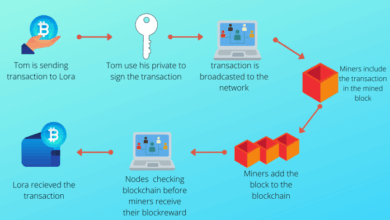
Traditional economic systems rely on centralized authorities – governments and banks – to control the money supply, set interest rates, and regulate financial activity. This centralized control allows for monetary policy adjustments, but also introduces the risk of manipulation and inflation. Bitcoin, in contrast, operates on a decentralized blockchain, where transactions are verified by a network of nodes and the money supply is algorithmically controlled.
This removes the need for intermediaries and reduces the risk of censorship or manipulation. The key difference lies in the trust model: traditional systems rely on trust in institutions, while Bitcoin relies on trust in cryptography and the network itself.
Digital Scarcity and Value Proposition
The cornerstone of Bitcoin’s value proposition is digital scarcity. Unlike fiat currencies, which can be printed at will by central banks, Bitcoin has a hard cap of 21 million coins. This scarcity, enforced by the underlying code, is what gives Bitcoin its potential as a store of value. In a world where assets are often subject to inflation and devaluation, a limited supply asset like Bitcoin can offer a hedge against these risks.
This scarcity isn’t just a technical feature; it’s a fundamental economic principle that drives demand and influences price.
The Scarcity of Bitcoin: A Deep Dive
The 21 million Bitcoin limit isn’t arbitrary. It’s a carefully chosen number designed to mimic the scarcity of precious metals like gold. This limited supply is a critical factor in understanding Bitcoin’s long-term value potential. As demand increases and the supply remains fixed, the price is expected to rise, assuming market forces operate efficiently.
Bitcoin’s Scarcity Compared to Precious Metals
While both Bitcoin and precious metals are scarce, their scarcity differs in nature. Gold’s scarcity is based on physical limitations – the difficulty of mining and the finite amount of gold on Earth. Bitcoin’s scarcity is based on cryptographic limitations – the hard-coded limit of 21 million coins. Gold is also subject to new discoveries and technological advancements that can increase the supply, while Bitcoin’s supply is predetermined and immutable.
However, gold has a long history as a store of value, while Bitcoin is still a relatively new asset, and its long-term viability remains to be seen.
Halving Events and Bitcoin Issuance
The rate at which new Bitcoins enter circulation is not constant. It’s governed by “halving” events, which occur approximately every four years. During a halving, the block reward given to miners for verifying transactions is cut in half. This reduces the rate of new Bitcoin issuance, further reinforcing its scarcity. The first halving in 2012 reduced the block reward from 50 BTC to 25 BTC.
Subsequent halvings have continued this trend, with the most recent halving in May 2020 reducing the reward to 6.25 BTC. This process is crucial to Bitcoin’s deflationary nature.
Bitcoin Issuance Schedule
Here’s a table illustrating Bitcoin’s issuance schedule:
| Date | Block Reward | Total Bitcoin in Circulation | % Change |
|---|---|---|---|
| November 28, 2012 | 25 BTC | 12.5 Million BTC | -50% |
| July 9, 2016 | 12.5 BTC | 16.5 Million BTC | -50% |
| May 11, 2020 | 6.25 BTC | 18.375 Million BTC | -50% |
| April 2024 (estimated) | 3.125 BTC | ~19.6875 Million BTC | -50% |
Demand Drivers for Bitcoin
The demand for Bitcoin is multifaceted, driven by a combination of factors ranging from investment and speculation to its utility as a decentralized payment system. Understanding these drivers is essential for predicting its future price movements and adoption rate.
Categories of Demand
Source: williamstickevers.com
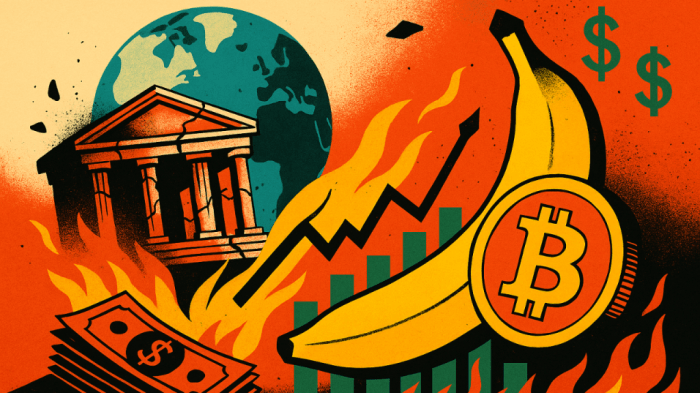
Demand for Bitcoin can be broadly categorized into three main areas: investment, speculation, and utility. Investment demand comes from individuals and institutions seeking a long-term store of value. Speculation is driven by the expectation of future price appreciation, attracting traders looking to profit from short-term price swings. Utility demand arises from individuals and businesses using Bitcoin for actual transactions, such as cross-border payments or purchasing goods and services.
These categories aren’t mutually exclusive; an investor might also engage in speculation, and a user might hold Bitcoin as a store of value.
Institutional Investor Impact
The entry of institutional investors – hedge funds, pension funds, and corporations – has significantly impacted Bitcoin’s demand. Their large-scale investments provide liquidity and legitimacy to the market, attracting further investment and driving up prices. Companies like MicroStrategy and Tesla have publicly invested in Bitcoin, signaling confidence in its long-term potential. This institutional adoption is a relatively recent phenomenon, and its continued growth is likely to be a major driver of future demand.
Macroeconomic Influences
Macroeconomic factors, such as inflation and interest rates, also play a significant role in Bitcoin’s appeal. During periods of high inflation, investors often seek alternative assets to protect their wealth, and Bitcoin’s limited supply makes it an attractive option. Low interest rates also encourage investors to seek higher-yielding assets, potentially driving demand for Bitcoin. The COVID-19 pandemic and the subsequent monetary easing policies by central banks have been cited as factors contributing to the recent surge in Bitcoin’s price.
Potential Future Demand Drivers
- Increased Regulatory Clarity: Clearer regulations could attract more institutional investment and mainstream adoption.
- Development of Layer-2 Solutions: Technologies like the Lightning Network can improve Bitcoin’s scalability and reduce transaction fees, increasing its utility.
- Growing Adoption in Developing Countries: Bitcoin can provide access to financial services for unbanked populations and facilitate cross-border remittances.
- Integration with Traditional Financial Systems: The development of Bitcoin ETFs and other financial products could make it easier for investors to gain exposure to Bitcoin.
- Advancements in Privacy Technologies: Enhanced privacy features could attract users concerned about financial surveillance.
Summary

Source: teacherspayteachers.com
So, where does this leave us? Bitcoin’s economics are complex, a blend of technological innovation and age-old economic forces. Its limited supply, coupled with growing demand from various sources, creates a unique value proposition. While volatility and regulatory hurdles remain, the underlying principles of scarcity and network effects suggest Bitcoin isn’t just a fleeting trend. It’s a potential paradigm shift in how we think about money and value.
Ultimately, the success of Bitcoin hinges on continued adoption, technological development, and a favorable regulatory environment. It’s a space that demands constant learning and critical thinking. The journey is far from over, and the economic story of Bitcoin is still being written, one block at a time. It’s a story worth watching, and hopefully, now you have a better understanding of the economic forces at play.
FAQ Explained
What makes Bitcoin different from traditional currencies?
Traditional currencies are controlled by central banks and governments, allowing them to print more money. Bitcoin has a fixed supply of 21 million coins, making it decentralized and resistant to inflation in the same way.
How does the Bitcoin halving affect the price?
The halving reduces the reward miners receive for verifying transactions, decreasing the rate at which new Bitcoins enter circulation. Historically, halvings have been followed by price increases due to reduced supply.
Is Bitcoin a good investment?
That depends on your risk tolerance and investment goals. Bitcoin is highly volatile and carries significant risk, but it also has the potential for high returns. It’s crucial to do your own research and understand the risks before investing.
What is the Lightning Network and why is it important?
The Lightning Network is a layer-2 scaling solution built on top of Bitcoin. It enables faster and cheaper transactions by creating a network of payment channels, addressing Bitcoin’s scalability issues.
How does regulation impact Bitcoin’s price?
Regulation can have a significant impact. Positive regulation can increase adoption and legitimacy, potentially driving up the price. Negative regulation or outright bans can stifle growth and decrease the price.